
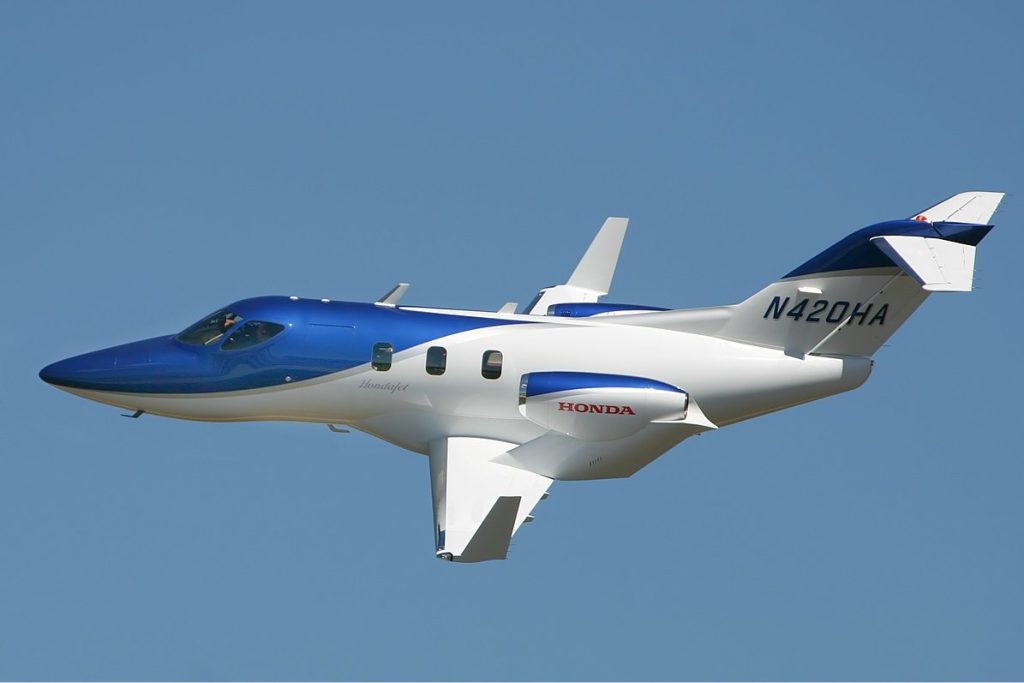
Emergency crews at Falcon Field in Mesa, Arizona, have cleared the scene of a deadly crash involving a Honda HA-420 HondaJet, leaving behind the still-smoldering wreckage. Five individuals lost their lives when the aircraft failed to become airborne during takeoff, instead colliding with a vehicle on the ground. The National Transportation Safety Board has launched an investigation, but a central question has already emerged: whether a celebrated design feature of the jet may have contributed to the accident. The HondaJet is a light business jet capable of seating six to seven people.
It is distinguished by its unique engine placement: two GE Honda HF120 turbofans mounted on pylons above the wings, rather than on the fuselage or beneath the wings. This over-wing configuration is a signature of the aircraft and a point of pride for the manufacturer, which claims it improves performance and efficiency.
The jet can cruise at 422 knots and has a range of 1,547 nautical miles. However, this same design alters the aircraft’s behavior at low speeds and high angles of attack—conditions typical during takeoff. The crash at Falcon Field occurred precisely during this phase of flight.
The aircraft did not clear the airport boundary before striking a vehicle on the tarmac. Five people died.
The stakes of the investigation extend far beyond a single incident. The HondaJet first flew in December 2003 and received its FAA type certificate in December 2015, with deliveries beginning that same month. Hundreds of these aircraft are now in service, carrying executives, families, and charter passengers.
If a design flaw is found, every one of those flights could carry an unknown risk. Investigators will follow a standard protocol.
The wreckage will be recovered, the flight data recorder analyzed, and the engines disassembled and examined. The airframe will be reconstructed piece by piece in a hangar, with inspectors looking for fractures, fatigue, or assembly errors. But the role of the over-wing engine configuration in the loss of control will be a focal point.
The aircraft did not fail during cruise; it failed at the moment it needed to lift off. There is precedent for such scrutiny.
Aircraft with unconventional engine placements have faced similar questions after accidents. Design choices that enhance cruise efficiency can sometimes make a jet less forgiving at the margins of its flight envelope. The HondaJet’s composite fuselage and aluminum wing provide strength and stability, according to the manufacturer, but controllability is what matters when a runway is running out and the aircraft is not climbing.
The five individuals who died at Falcon Field on November 6, 2024, will not return. Their families, along with the broader flying public, await answers.
If the investigation uncovers a design flaw, the consequences could include grounded fleets, costly retrofits, and eroded confidence. If no flaw is found, the crash may be classified as a rare anomaly. Until the final report is released, every HondaJet in the air operates under a cloud that only the wreckage can dispel.




