
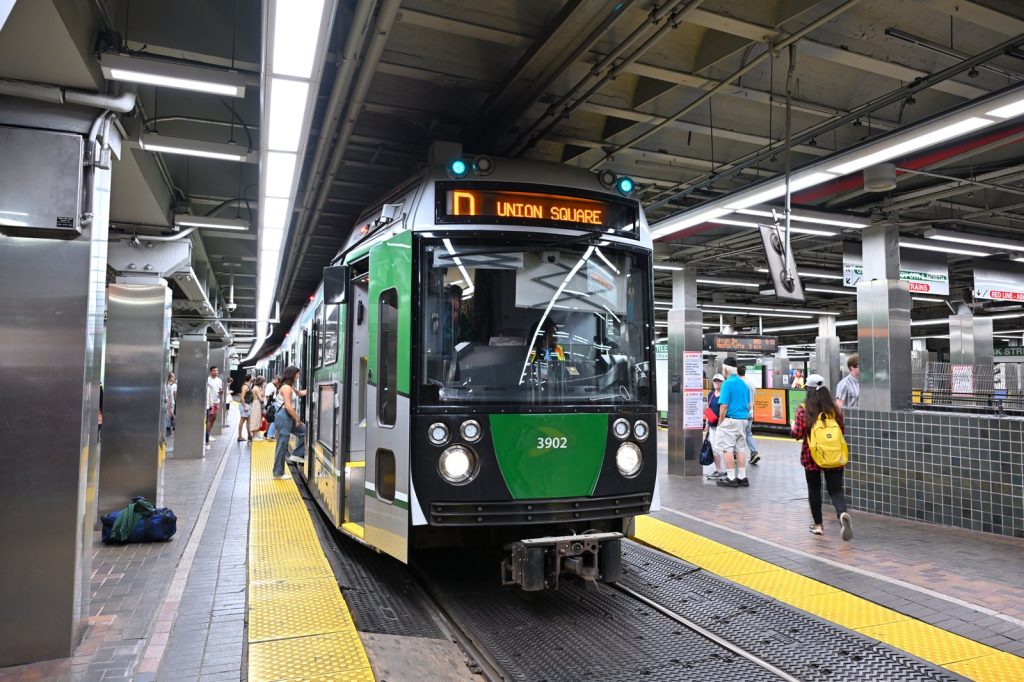
Green Line Crash Spotlights Age‑Related Risks
On an average weekday in 2023, 101,000 passengers rely on the Green Line for their trips. That volume sets the stage for the incident that unfolded in Somerville on February 9, when five riders were hurt. Two trains left the rails that morning.
One of the trains was out of service and stationary on the tracks; the other, a regular Green Line service, struck it. The impact caused both vehicles to derail.
The Massachusetts Bay Transportation Authority operates the line, which first opened in 1897. That makes it among the oldest subway corridors in North America. Decades‑old infrastructure does not yield gently; it tends to fail in ways such as collisions and derailments.
The Green Line consists of six branches that travel along radial boulevards and grade‑separated sections, threading through downtown Boston, extending into the suburbs, and weaving through the Emerald Necklace park system. The MBTA has been pursuing modernization projects, yet the age of the network remains a stubborn reality.
After the crash, the agency announced it will review its safety protocols and examine its operating procedures. The terms “review” and “protocols” appear routinely after such events, signifying an effort to determine what went wrong and to implement corrective measures. Whether those changes endure is a separate matter.
As a light‑rail route, the Green Line ranks among the busiest in the United States. The 101,000 weekday riders place their trust in the system to get them to work, school, and other destinations.
Trust is built over years, but a single collision can erode it in an instant. Investigators are still at work; no cause has been released and no individual has been identified as responsible. The official report does not name a driver, a supervisor, or a passenger—it cites only the number five and the fact of the crash.
The sequence is clear: an out‑of‑service train was parked on the line when a moving Green Line train collided with it, leading to both units leaving the tracks. Why the collision occurred—whether due to signal failure, human error, or a track defect—remains the focus of the inquiry.
Although the MBTA has been upgrading signals, tracks, and other components, those improvements take time to deploy. Commuters, meanwhile, continue to rely on the line for their daily journeys and cannot wait for long‑term upgrades. The Emerald Necklace, a cherished stretch of green space that the Green Line traverses, underscores the blend of urban transit and natural scenery that defines Boston. The authority’s mandate is to keep the line safe; aesthetics belong to the parks, not the trains.




