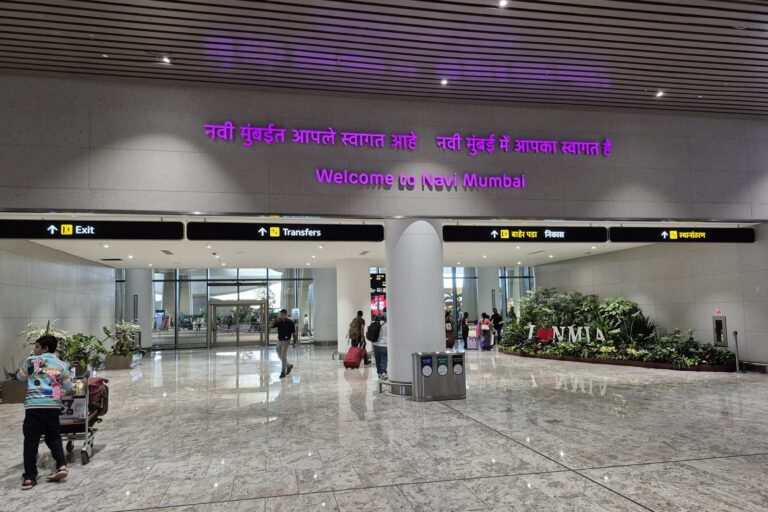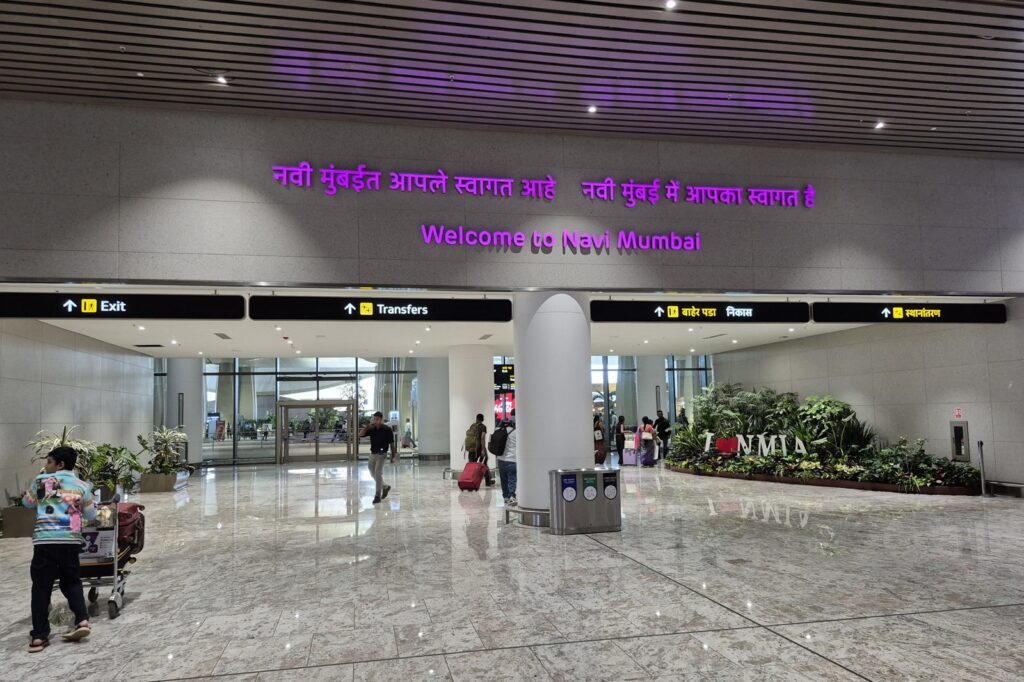
IndiGo has announced it will shift 12 daily international departures from Mumbai’s Chhatrapati Shivaji Maharaj International Airport to the newly operational Navi Mumbai International Airport starting in February. This specific airline move serves as the first major test case for the broader operational strategy that Mumbai International Airport Ltd (MIAL) has been attempting to implement to manage capacity constraints at the city’s primary hub.
The decision by India’s largest carrier highlights the tension between the urgent need to restructure air traffic in the Mumbai Metropolitan Region and the regulatory hurdles facing the airport operator. While the government has approved the expansion of aviation infrastructure, the execution of a coordinated shift in international traffic remains a point of significant contention among stakeholders.
A Two-Runway Solution for a Saturated Hub
The operational logic behind the shift is rooted in the physical limitations of the current infrastructure in Santacruz. Chhatrapati Shivaji Maharaj International Airport, or CSMIA, operates two terminals that are nearing their maximum efficiency. Terminal 1, located on the Vile Parle side, is an aging facility that handles domestic flights. Terminal 2, on the Andheri East side, manages international traffic and is expected to gain an additional capacity of five million passengers per annum by March 2027, according to the Airline Operators Committee.
However, MIAL has identified a critical bottleneck. The operator plans to demolish and rebuild parts of Terminal 1 to modernize the facility. This redevelopment work will displace approximately five million domestic passengers per annum. To accommodate this displaced traffic without halting operations, MIAL proposed shifting 265 of the airport’s 770 weekly international departures to the new airport in Navi Mumbai. This move was intended to free up gate slots and runway capacity at CSMIA during the summer schedule of 2027.
The new facility, Navi Mumbai International Airport, provides the necessary surplus capacity to absorb this traffic. Located in the Ulwe suburb in Raigad district, the airport is one of two major aviation hubs in the Mumbai Metropolitan Region. It was inaugurated on 8 October 2025 by Prime Minister Narendra Modi, with commercial operations commencing on 25 December 2025. The airport features a single 3,700-meter runway oriented in a northeast-southwest direction, allowing it to handle long-haul international flights.
From Proposal to Reality: A Decade of Development
The existence of a second airport in the region is the result of nearly three decades of planning and construction. The project was first proposed in November 1997 by the City and Industrial Development Corporation, or CIDCO. At that time, the Ministry of Civil Aviation constituted a committee to examine the feasibility of a second airport. The committee initially deemed the Navi Mumbai location suitable only for domestic operations due to the proposal for a single runway. CIDCO subsequently revised its plan to incorporate two parallel runways, though the current phase involves a single runway.
The Indian government approved the project in 2007, appointing CIDCO as the nodal agency. The project was estimated to cost 167 billion rupees, or 1.7 billion US dollars, and was planned to be implemented in three phases. By 2032, the full capacity is projected to handle 90 million passengers and 2.5 million tonnes of cargo per annum.
The construction timeline faced delays due to land acquisition issues. The ground-breaking ceremony was held in February 2018, but actual construction did not begin until August 2021. In 2021, a special-purpose vehicle, Navi Mumbai International Airport Ltd, was established between Adani Airport Holdings and CIDCO to manage the project. Larsen & Toubro carried out the construction. The airport’s terminal buildings feature a lotus-shaped design, which will be complete once three interconnected terminals are constructed in future phases.
The Numbers Behind the Capacity Shift
The financial and operational stakes are significant for the stakeholders involved. Adani Airport Holdings Ltd holds a 74% stake in MIAL, which operates and manages CSMIA. MIAL, in turn, holds a 74% stake in Navi Mumbai International Airport Ltd. This structure gives the Adani Group effective control of both major airports in the Mumbai Metropolitan Region, creating a vertically integrated aviation ecosystem.
The capacity metrics for the new airport are substantial. After the first phase, the single passenger terminal at Navi Mumbai has a capacity to handle 20 million passengers per annum. The cargo terminal, spread over 33,000 square meters, is equipped to handle 0.8 million tonnes of cargo in a year. These figures suggest that the new airport can absorb a significant portion of the international traffic currently concentrated at CSMIA.
MIAL’s proposal to shift 265 weekly international departures was calculated to free up sufficient space at CSMIA to handle the displaced domestic traffic from Terminal 1. The operator argued that reorganizing flight operations would help accommodate passengers affected by the redevelopment while ensuring the airport continues to function smoothly. The Airline Operators Committee, however, questioned the necessity of cutting international departure slots at Terminal 2 to accommodate the domestic passengers. They pointed out that Terminal 1 currently handles fewer than 10 million passengers per annum, against its capacity of 15 million, suggesting that there may be internal efficiencies to be gained before shifting international traffic.
Regulatory Pushback and the Consultation Process
The proposed shift triggered a dispute over airport capacity, passenger convenience, and the consultation process. The Airline Operators Committee, which represents airlines operating from Mumbai airport, categorically rejected any unilateral traffic reallocation, slot reduction, or cancellation of international operations without due process. In a letter to MIAL, the committee stated that the airport operator must honor the Ministry of Civil Aviation’s slot-allocation guidelines issued in May 2013, as well as the International Air Transport Association’s Worldwide Airport Slot Guidelines.
The committee argued that individual consultations with certain airlines could not be construed as collective acceptance of the proposed shift. They requested that MIAL refrain from treating the proposed traffic reallocation as a settled decision or taking any action that may prejudice the rights or allocated slots of member airlines. The dispute began with MIAL’s October 1 proposal to temporarily cut 265 of Mumbai airport’s 770 weekly international departure slots from October 25, the beginning of the winter schedule.
In response to the opposition, the Ministry of Civil Aviation asked MIAL to defer the plan and work with airlines on a mutually agreed transition. On October 13, MIAL stated that it would maintain existing international flight allocations through the winter schedule, which runs from October 25, 2026, to March 27, 2027. Any subsequent transfer would follow consultations with individual airlines. A follow-up meeting between airlines and airport operators is scheduled for October 28.
Implications for Airline Operations and Market Structure
The immediate implication of these developments is that the shift of international flights to Navi Mumbai is not a blanket mandate but a negotiated process. IndiGo’s decision to move 12 daily departures in February represents a voluntary or negotiated relocation, rather than a forced reallocation. This distinction is critical for understanding the market dynamics. Airlines are retaining the option to relocate their operations to Navi Mumbai at their discretion, a move supported by Adani Airport Holdings Ltd.
For the competitive landscape, the existence of two major airports in the Mumbai Metropolitan Region changes the calculus for carriers. The new airport offers a modern facility with a 20-million-passenger capacity, which can attract airlines seeking to expand their international networks without the constraints of the aging CSMIA infrastructure. The cargo capacity of 0.8 million tonnes per annum also presents an opportunity for logistics companies to diversify their supply chains.
However, the transition period remains complex. The Airline Operators Committee has demanded a comprehensive Terminal 1 refurbishment plan, including its scope, structural safety assessment, implementation phases, and timelines. They require that these details be shared and jointly examined before alternative operational arrangements are considered. The committee also sought a written response confirming that no unilateral action affecting airline slots would be taken pending meaningful consultation.
The numbers suggest that the capacity at CSMIA is not entirely saturated, with Terminal 1 operating below its 15-million-passenger capacity. This has led the airlines to question the substantiated justification for reducing or cancelling slots at CSMIA. They argue that any such proposal must be supported by verifiable capacity assessments, operational data, and a clear, evidence-based justification.
The outcome of the October 28 meeting will likely set the precedent for how the two airports will accommodate traffic while Mumbai’s existing terminal undergoes redevelopment. The shift of international flights to Navi Mumbai is not merely a logistical adjustment but a strategic restructuring of Mumbai’s aviation hub. It reflects the broader trend of Indian cities expanding their air connectivity to meet growing demand. For businesses and investors, the key takeaway is the potential for increased capacity and efficiency in the Mumbai Metropolitan Region, provided that the regulatory and operational challenges are resolved through cooperative rather than unilateral means. The integration of the two airports under a common ownership structure by the Adani Group suggests a long-term vision for a unified aviation network, but the immediate future depends on the willingness of airlines and regulators to work within the existing framework of slot allocation and due process.
Sources
- Navi Mumbai International Airport
- Airlines reject Navi Mumbai shift, challenge Mumbai airportâs summer slot reduction plan
- Mumbai airport T1 revamp: What the Navi Mumbai flight shift means
Photo: Suraj Digrase (CC0)