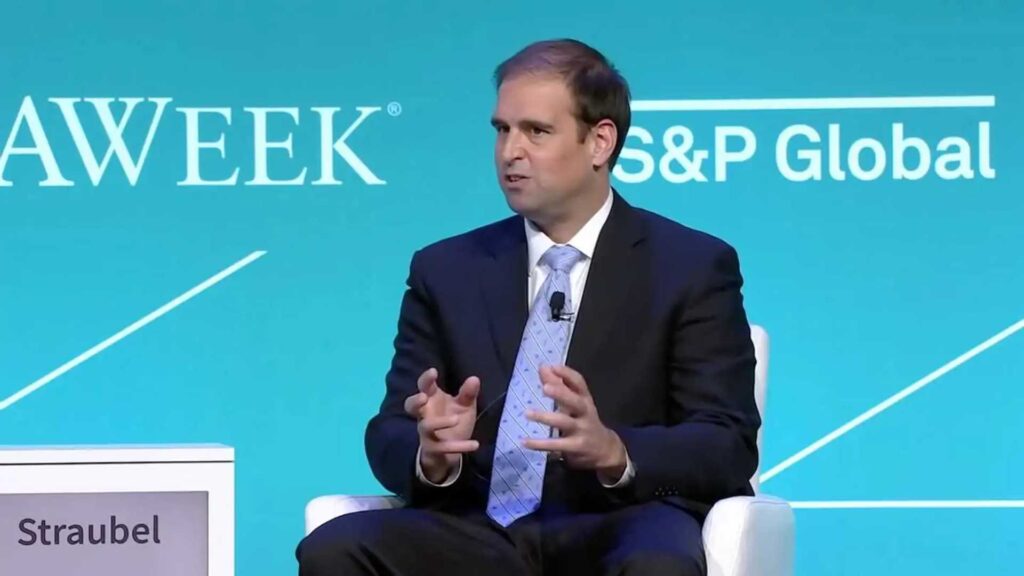
WASHINGTON, July 14 — The strategic calculus behind the United States’ push for lithium-ion battery recycling is coming into sharper focus as established players and newcomers alike jostle for position on a rapidly expanding geopolitical chessboard. At the center of this industrial competition is Redwood Materials, the Carson City, Nevada-based recycler founded in 2017 by former Tesla CTO JB Straubel. Redwood Materials currently processes over 10,000 tons of battery material annually, a figure that signals its ambition to scale significantly.
The company has secured partnerships with Ford, Toyota, and Panasonic, anchoring itself within the supply chains of major automakers and electronics manufacturers. What this signals is a deliberate strategy to control the full lifecycle of battery components, from raw material extraction to end-of-life recovery.
The South Carolina Gambit
In 2023, Redwood Materials announced a $3.5 billion facility in South Carolina designed to produce anode and cathode materials, the core components of lithium-ion batteries. This move represents a direct challenge to the traditional dominance of Asian supply chains, particularly those in China, which have long controlled the processing and manufacturing of these critical materials. Strategically, the South Carolina plant positions Redwood to serve the growing electric vehicle manufacturing base in the southeastern United States.
The broader stakes are clear: the U.S. Department of Energy has invested $3 billion in battery recycling through the Bipartisan Infrastructure Law of 2021. This federal backing reflects a recognition that securing domestic battery material supply chains is not merely an economic issue but a matter of national security and industrial competitiveness.
Competitors and the Field
Redwood is not alone in this arena. Li-Cycle, founded in 2016 in Toronto, Canada, employs a hydrometallurgical “Spoke & Hub” model, with preprocessing facilities called spokes and refining hubs. Its Rochester, New York hub, expected to begin operations in 2024, is designed to process 35,000 tons of black mass annually — the crushed battery material that contains valuable metals.
Veolia, the French multinational founded in 1853, brings a century of industrial experience to the sector. The company operates over 1,000 recycling facilities globally, including a lithium-ion battery recycling plant in France that processes 1,000 tons per year.
Umicore, founded in 1989 in Belgium, recycles 7,000 tons of batteries annually. Retriev Technologies, founded in 1992 in Ohio, processes 10,000 tons per year, matching Redwood’s current throughput. The calculus for these companies is straightforward: as electric vehicle adoption accelerates, the volume of spent batteries requiring recycling will surge.
The companies that establish efficient, scalable processes now will dominate the market for years to come.
What to Watch
The coming quarters will test whether Redwood Materials can execute its ambitious expansion plans while maintaining its technological edge. The South Carolina facility represents a significant capital commitment, and its success or failure will send ripples through the industry. Meanwhile, Li-Cycle’s Rochester hub and Veolia’s European operations will provide benchmarks for what efficient, large-scale battery recycling looks like in practice.
For policymakers and investors alike, the question is no longer whether battery recycling matters — it is which players will emerge as the dominant forces in this critical industrial sector. The answer will shape not just corporate balance sheets but the broader strategic positioning of the United States in the global energy transition.