NEW YORK, June 27 — What if the work we are so busy automating is needless? That is the uncomfortable question Charles Hugh Smith, editor of the blog Of Two Minds, poses in a new essay. It is a question, he says, that most people meet with silence.
Because it challenges two quasi-religious beliefs that underpin our entire way of life. The first belief: that Progress is inevitable because technology inevitably drives Progress.
Smith calls this “The Mythology of Progress.” The second: that the desire to get rich inevitably drives innovation, which then drives Progress. Neither belief, Smith argues, is actually grounded in science. But each is “cloaked in the finery of science to mask their true nature” as belief structures.
The gods of technology and finance, he writes, are treated as real and powerful. Questioning them, he says, is met with silence.
Because if those gods are imaginary constructs of belief, then “the entirety of Modernity collapses.” So we keep worshipping. With charts and spreadsheets and euphoric headlines. Smith points to the promise of thousands of modular nuclear reactors that will power super-abundance — despite the fact that not a single one is functioning 24/7 reliably, safely and cheaply.
Vast quantities of dollars are still needed to dig up and process the fuel, construct the reactors and operate them. “But never mind that,” he writes. “The gods have promised that technological Progress is unstoppable and inevitable.” Smith sees a deeper problem baked into the system itself.
The problem with durable, low-maintenance, low-operating cost technologies is self-evident, he says: they are not as profitable as planned obsolescence or extracting monthly fees from owners. What this means for families, for patients, for the human side of the economy is a question that rarely gets asked.
If the work being automated was never necessary in the first place — if it was only created to generate fees and replace things that lasted — then what exactly are we gaining? The possibility that Anti-Progress might not just negate Progress but reverse it is strictly forbidden territory. Even recognizing Anti-Progress as a reality is off the table.
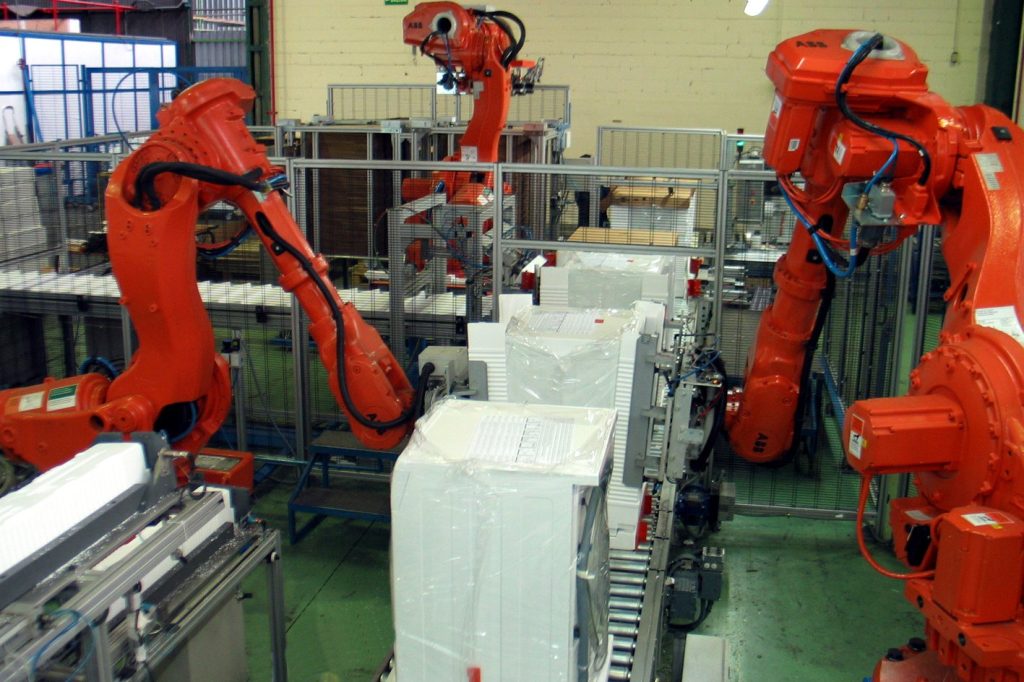
Smith’s essay arrives at a moment when the headlines are full of artificial intelligence and robotics promising to transform every corner of work. Behind the breakthrough, the human side of that story is often lost.
The people whose jobs are being automated, the families whose incomes depend on work that may be needless — they are the ones who will feel the weight of these choices. What to watch next is whether the silence Smith describes will hold. Whether the quasi-religious beliefs he names can withstand the kind of honest accounting he is calling for.
Or whether, as the costs of worshipping those gods become harder to ignore, more people will start asking the question out loud.