
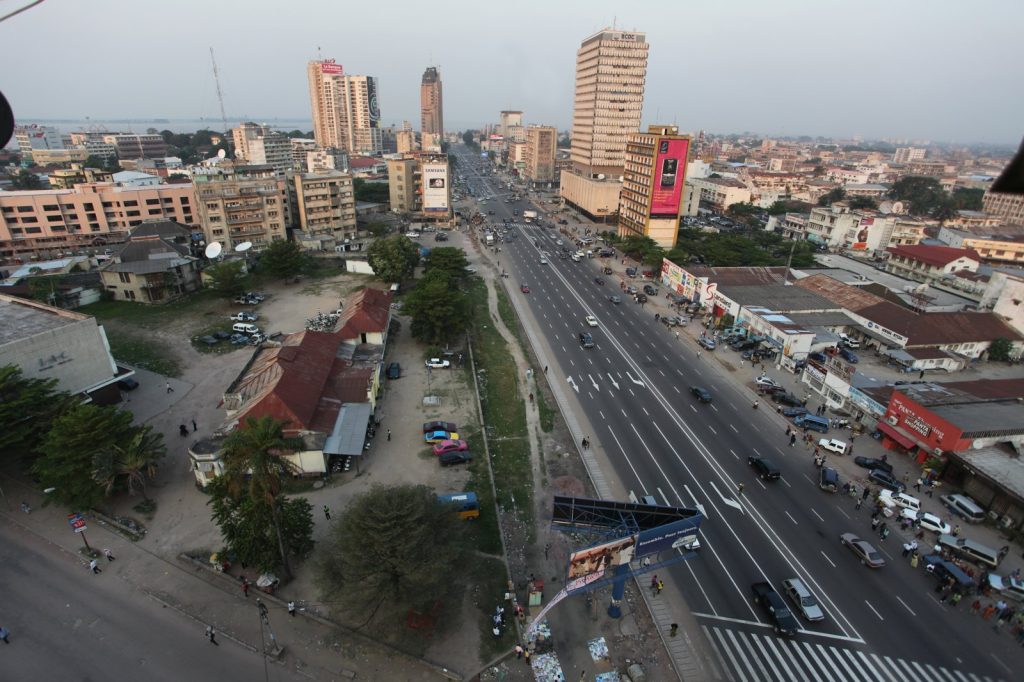
At least 18 people lost their lives when a bus and a truck collided on a Kinshasa thoroughfare, a tragedy that underscores a deeper, long‑standing problem in the Congolese capital’s transport infrastructure. The city, formerly known as Léopoldville, is projected to house nearly 18.5 million residents by 2026, yet its road network has not expanded to accommodate that surge.
Kinshasa serves as the Democratic Republic of the Congo’s economic, political and cultural hub. Manufacturing plants, telecommunications providers and banks all rely on a functional transportation system to move goods and personnel. The recent crash is not an isolated incident; it reflects a pattern of accidents linked to roads that were never designed for the current volume of traffic.
Rapid urbanisation fuels the city’s growth, but infrastructure development has lagged behind. The limited road grid, weak traffic‑management mechanisms and postponed maintenance create conditions where collisions become more likely.
The bus‑truck crash, therefore, is a symptom of systemic failure rather than a surprise. Beyond the immediate loss of life, the accident threatens Kinshasa’s broader functionality. As the nation’s primary engine of commerce, any disruption to its transport arteries can slow industrial output, impede banking operations and hinder telecommunications services.
When roads become hazardous, the ripple effects stall the sectors that depend on them. Experts point to three core deficiencies that need urgent attention: the absence of effective traffic‑control systems, insufficient investment in road upkeep, and a lack of enforcement of safety regulations.
Addressing these issues is not a matter of abstract policy but a practical requirement for the city to sustain its growth. The collision serves as a stark warning. While Kinshasa continues to attract factories, banks and other enterprises, the accompanying rise in vehicle numbers strains a network that remains narrow and poorly maintained.
The mathematics is clear: more vehicles on limited roads increase the probability of accidents, a reality already reflected in the recent fatalities. Environmental considerations, such as the potential for renewable energy sources like solar and wind, have been mentioned in broader discussions about the city’s future.
However, these long‑term solutions do not address the immediate need for safer asphalt and sturdier bridges. The pressing concern is the physical condition of the roads that daily commuters rely on. Kinshasa ranks among the world’s fastest‑growing cities, a status that brings both opportunity and pressure. The current crash reveals a crack in the city’s infrastructure that cannot be ignored.
Simply issuing condolences or publishing additional reports will not rectify the underlying problems. What is required are tangible actions: upgrading road surfaces, expanding the network to match population growth, installing reliable traffic‑management technology and ensuring rigorous enforcement of traffic laws.
Without such measures, the city risks further collisions, additional loss of life, and a slowdown of the economic activities that define its role in the DRC. The tragedy that claimed at least 18 lives is a factual reminder that Kinshasa’s infrastructure is not keeping pace with its expansion. The stakes extend beyond individual fatalities to the very viability of the city’s economy.
Policymakers now face a choice—treat the incident as a mourned loss or recognize it as a clear signal to act. The evidence points to the latter: a road network that is insufficient, traffic control that is inadequate, and maintenance that is lacking—issues that can be resolved with decisive political will and targeted investment.




