The Black Sea, a marginal sea stretching between Europe and Asia, has for centuries served as a vital artery for the movement of goods from the East European Plain. Its shores touch six nations, and its waters connect to the world’s oceans through the narrow Turkish Straits of the Bosporus and Dardanelles.
When Russia’s full-scale invasion of Ukraine in February 2022 led to a naval blockade of Ukrainian ports, that artery was severed, sending shockwaves through global food markets. The resulting crisis prompted a landmark diplomatic effort, the Black Sea Grain Initiative, which ultimately offered both a lesson in the power of negotiation and a stark reminder of its fragility.
A Landmark Deal to Avert Hunger
Signed on July 22, 2022, between Russia, Ukraine, Turkey, and the United Nations, the Black Sea Grain Initiative was designed to safely export grain and other foodstuffs from three Ukrainian ports: Odesa, Chornomorsk, and Yuzhny. The aim was to address the global food insecurity triggered by the blockade.
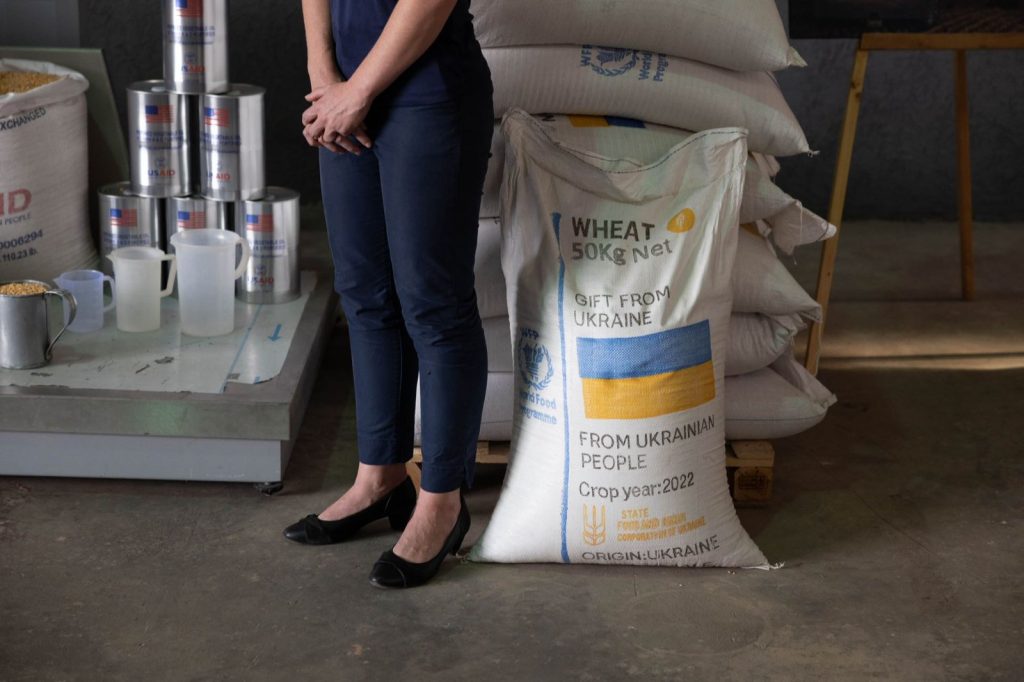
Over its lifespan, the initiative enabled the export of more than 32 million metric tons of grain and other food products from Ukraine. According to the United Nations, 45 percent of that total went to developing countries. The UN Food and Agriculture Organization’s Food Price Index, which had peaked in March 2022, declined by 20 percent by the end of 2023, a shift partly attributable to the resumption of Ukrainian exports.
Yet the agreement expired on July 17, 2023. Russia withdrew from the initiative, citing unmet demands related to its own agricultural exports.
The diplomatic corridor that had kept grain flowing was abruptly closed.
Ukraine’s Maritime Response
In the wake of Russia’s withdrawal, Ukraine launched a maritime campaign that included strikes on Russian vessels. This military pressure helped secure a temporary shipping corridor from Odesa, allowing grain exports to resume without Russian approval.
By early 2025, Ukraine had exported over 40 million tons of grain via this corridor. Global food prices, which had spiked in 2022, have since stabilized, and FAO data shows that the decline in its Food Price Index was partly driven by these continued Ukrainian exports. The geography of the region underscores why such maritime routes matter: the Black Sea is fed by major rivers including the Dnieper, Dniester, and Danube, and its drainage basin reaches into several European countries. Water from the sea flows through the Turkish Straits into the Aegean Sea, then to the Mediterranean and the Atlantic.
To the north, the Kerch Strait connects the basin to the Sea of Azov. Control of these waters is significant because the region supports major coastal cities and shipping hubs.
Disruptions to Black Sea shipping affect the movement of goods across multiple continents.
An Uncertain Future for Grain Exports
As of mid-2026, the temporary corridor remains operational, though its long-term viability is uncertain. Russia has not returned to the negotiating table for a renewed grain deal, and the broader conflict shows no signs of resolution.
For the international community, the lesson of the Black Sea Grain Initiative is clear: diplomatic agreements can work, but they are fragile. Against this backdrop of war, the flow of grain from Odesa continues — but it does so under the shadow of naval strikes and shifting geopolitical calculations. The stability of global food prices, partly restored by Ukrainian exports, remains tied to the security of a single shipping lane that could be disrupted at any moment by the ebb and flow of the conflict.