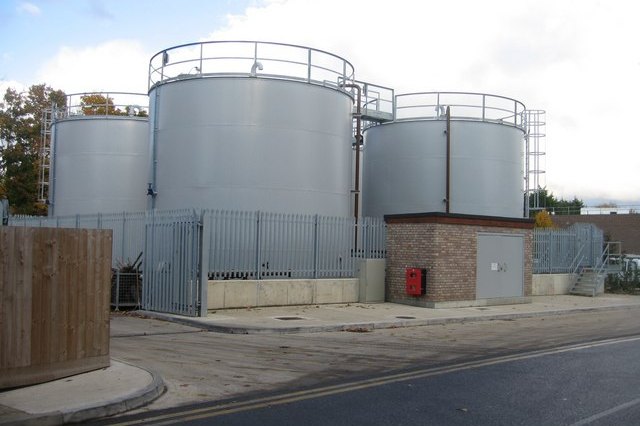
A Ukrainian strike on an oil depot in Stavropol Krai Saturday underscored a widening campaign targeting Russian energy infrastructure, with measurable effects on global oil markets and Moscow’s fiscal health. Data from the first quarter of 2024 shows a Russian oil sector under mounting pressure from both battlefield disruptions and Western economic measures. The attack on the Stavropol Krai depot fits a pattern in which Ukrainian forces have hit Russian oil storage, transport, and refining assets.
Such strikes serve a dual purpose: they disrupt fuel supplies that sustain Russian military operations, and they cut into the export earnings that fund the state budget. The immediate market reaction has been upward pressure on crude prices.
Brent crude, the international benchmark, rose from $75 per barrel in January 2024 to $85 per barrel in April 2024, a gain partly attributed to supply disruptions from the conflict.
Revenue Decline and Budget Pressure
The economic toll on Russia’s energy sector is already visible in official figures. According to the International Energy Agency, Russia’s oil export revenue fell to $15.3 billion in March 2024, down from $18.5 billion in March 2023. That decline reflects both lower export volumes and constrained pricing, as Russian crude sells at a discount on global markets.
The revenue shortfall has rippled into state finances. Russia’s budget deficit widened to $30 billion in the first quarter of 2024, a gap partly driven by reduced energy income.
The deficit adds strain to a government that has increased military spending since the invasion of Ukraine in 2022. The significance of oil revenue to Russia’s national power has a long history. The country’s modern oil industry traces its roots to the late 19th century, with discoveries in the Caucasus and later Siberia transforming the nation into a major producer.
Under the Soviet Union, state control centralized production and exports, making oil a strategic asset during the Cold War. After the Soviet collapse, privatization created vertically integrated giants such as Rosneft and Lukoil, which expanded drilling, pipelines, and refining both domestically and abroad.
By the 21st century, Russia had become one of the world’s top exporters, supplying Europe and Asia with crude and refined products. Oil revenue, in turn, funded government budgets and military spending, linking energy policy directly to national power.
Sanctions and Price Cap
The United States and the European Union have imposed a suite of sanctions on Russian oil, including a price cap of $60 per barrel that took effect in December 2022. The mechanism is designed to limit the Kremlin’s profits from crude exports while allowing shipments to continue, thereby preventing global shortages. Combined with Europe’s embargo on seaborne Russian crude, the price cap has pushed Moscow to redirect most of its exports eastward to China, India, and Turkey.
The revenue data for March 2024 suggests these measures are having their intended effect: Russia is earning less per barrel, even as it finds alternative buyers. The sanctions regime and the physical damage from strikes together form a two-sided constraint on Russia’s energy sector.
Lower export revenue reduces the funds available for military operations, while infrastructure attacks degrade the logistical network needed to move fuel to the front. The Stavropol Krai depot strike is one incident in this ongoing effort to put Russian oil facilities in the crosshairs.
Energy as a Battlefield Asset
Energy infrastructure has become a new front in the conflict. Ukrainian strikes on Russian oil storage and transport aim to erode both operational capacity and export earnings. The resulting supply risks and price swings affect consumers worldwide, from gasoline buyers to industries reliant on petrochemicals.
For readers, this means energy costs and availability remain sensitive to the shifting front lines and the enforcement of sanctions. Looking ahead, the trajectory of oil prices will depend on several factors: the frequency and effectiveness of further strikes on Russian energy infrastructure, the enforcement and potential adjustment of the $60 price cap, and global demand trends.
Market participants are watching for any escalation that could take more Russian refining or storage capacity offline. The data from the first quarter of 2024 already shows a Russian budget under pressure. Whether that pressure translates into changes in operational capacity or strategic calculations in Ukraine remains an open question. What is clear from the record is that energy has become a battlefield asset, and its disruption carries consequences that extend well beyond the conflict zone.