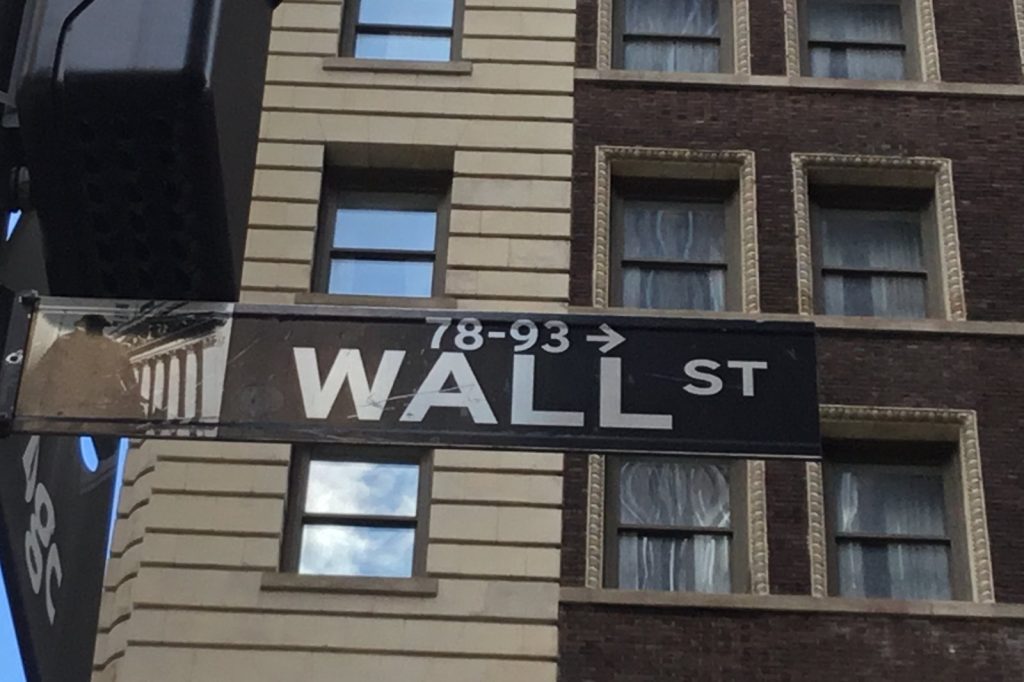
A moderate decline in the Dow Jones Industrial Average on January 6, 2025, fits a pattern seen repeatedly over the past 35 years: a geopolitical shock triggers an initial sell-off that historically has reversed. The Dow fell 1.1% that day, a move that analysts say mirrors the market’s response to the U.S. killing of Iranian General Qasem Soleimani on January 3, 2020, which produced a 0.8% drop that was fully erased within a week.
The January 6 sell-off coincided with a rise in the CBOE Volatility Index, known as the VIX or “fear index,” which climbed 18% to 22.4 from 19.0 on January 3.
Historical Patterns of Geopolitical Sell-Offs
The January 6 decline is part of a longer historical record where initial market drops have given way to recovery. On August 2, 1990, Iraq’s invasion of Kuwait led to a 1.5% drop in the Dow on the same day; over the following three months the index fell 17% before eventually recovering.
During the 2003 invasion of Iraq, the Dow declined 2.5% on March 17 of that year but rose 8% over the next month. The killing of Soleimani in 2020 caused a 0.8% drop that reversed within a week. The 1.1% decline on January 6, 2025, falls within the range of these earlier episodes.
The VIX reading of 22.4 remains well below levels that historically signal severe crisis—above 30—and far from the peak readings of 80.86 during the 2008 financial crisis and 82.69 during the COVID-19 pandemic. Each of these prior geopolitical shocks saw initial declines followed by a rebound, a record that offers some comfort to investors monitoring the current situation.
Risk-Off Move Versus Panic Selling
Analysts at JPMorgan described the January 6 sell-off as a “risk-off” move rather than a panic, suggesting the potential for a quick rebound if tensions de-escalate. The VIX spike to 22.4, while notable, remains below the 30 threshold that has historically marked severe crises.
The distinction between a risk-off adjustment and a true panic-driven crash is crucial for understanding how markets recover. A stock market crash is defined as a sudden, dramatic decline in stock prices across a major section of a market, leading to a large loss of paper wealth. Such events are often driven by panic selling and underlying economic factors, and they typically follow periods of speculation and economic bubbles.
They often occur during bull markets characterized by excessive optimism, where price-earnings ratios may exceed long-term averages and many participants rely on margin debt to fund investments. The process is a social phenomenon: external economic events combine with crowd psychology to create a feedback loop, with selling by some participants driving others to sell, accelerating the downward move.
The current VIX reading of 22.4 suggests that fear has not reached levels seen during the 2008 financial crisis or the COVID-19 pandemic, and that the move is more about reducing risk than fleeing markets entirely. The historical record offers perspective: every major geopolitical sell-off since 1990 has eventually reversed. The 1990 Iraq invasion led to a 17% decline over three months, but the market recovered.
The 2003 invasion saw a 2.5% drop on the day war began, followed by an 8% rise within a month. The 2020 Soleimani killing caused a 0.8% drop, reversed within a week.
The January 6, 2025, drop of 1.1% fits within that range. Understanding these patterns helps investors distinguish between a temporary dip and a systemic collapse, providing a clearer view of whether a decline is a rational risk adjustment or a panic-driven crash. That distinction determines how markets recover after a shock, and the current indicators—a VIX at 22.4, a Dow drop of 1.1%, and JPMorgan’s assessment of a risk-off move—point to the former rather than the latter.