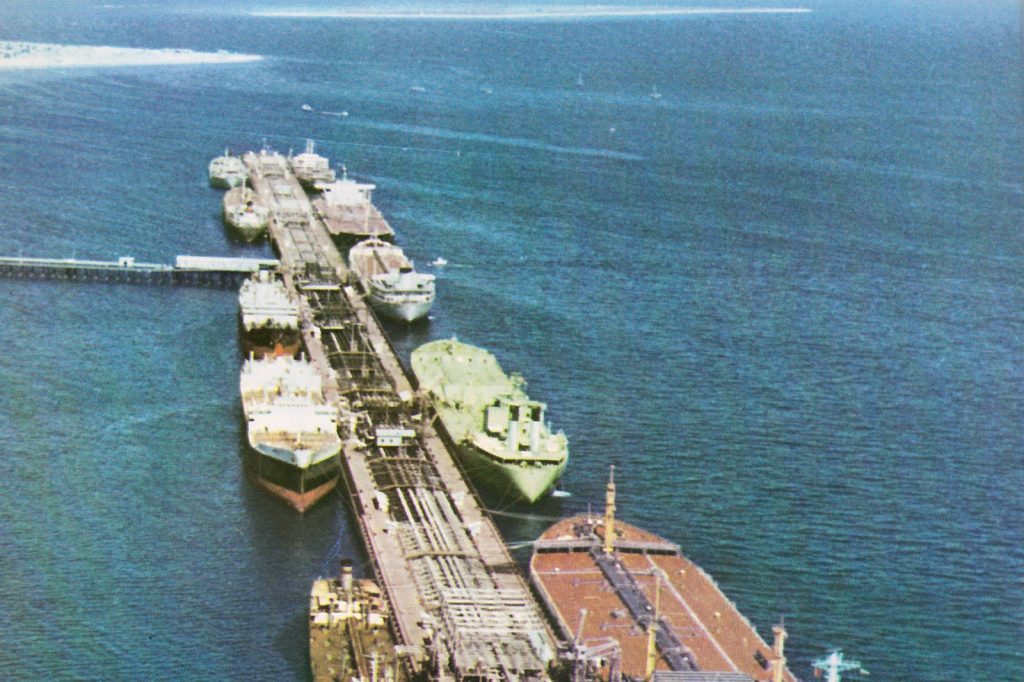
The 60-day license is the detail that matters most. The United States granted Iran permission to sell oil on global markets for two months. That single action, reported Tuesday, is reshaping how investors read the Asian trading session.
Asian markets are mostly lower. The Australian benchmark S&P/ASX 200 index is moving well above the 8,800 level, but trading is choppy.
Gold miners and technology stocks are weak. Iron ore miner stocks are up. The net effect is a slight decline, reversing some losses from the prior three sessions.
This is not a panic. It is a recalibration.
The license changes the calculus. For weeks, the dominant story has been the uncertainty around peace talks to end the Middle East war and the related complete opening of the Strait of Hormuz. Traders have been guessing.
Will the strait open fully? Will sanctions hold? Now there is a concrete timeline.
Iran has 60 days to sell. That is enough time to move real volumes of crude.
Officials said the move boosts expectations for a faster recovery in crude oil supply. That is a supply-side shock in the making. Markets hate supply shocks.
But they also hate uncertainty. The license removes some uncertainty while introducing new variables.
How much oil will Iran actually sell? At what price? Will the talks collapse before the 60 days expire?
The mixed cues from Wall Street overnight reflect the same confusion. The Federal Reserve policy session was in focus this week, the first led by new chief Kevin Warsh. Central banks in Europe, the U.K., Switzerland, and Japan all announced decisions.
That is a lot of policy news hitting at once. The Australian market is the clearest window into this moment.
It is choppy. That is the word used. Not collapsing, not rallying.
Choppy. Investors are picking sectors.
They are selling gold miners, buying iron ore miners. They are watching the Strait of Hormuz. They are watching the Fed.
They are watching Iran. No one is placing big bets. The region has a history of resilience in the face of economic challenges.
Officials are watching closely. The 60-day license is a test.
It tests whether the peace talks have real momentum. It tests whether Iran can re-enter global markets without triggering a price war. It tests whether the Strait of Hormuz can open fully without chaos.
The answer is not yet clear. But the clock is ticking.
This is not a story about a single day of trading. It is a story about a structural shift in the global oil market. The US decision to grant the license is a bet.
The bet is that allowing Iran to sell oil now will accelerate the peace talks and stabilize the region. The risk is that it does the opposite. That it floods the market with supply, crashes prices, and undermines the very talks it was meant to support.
Asian markets are pricing in that risk. They are trading lower.
They are not trading in a straight line. The S&P/ASX 200 is above 8,800. That is a high level.
But the direction is down. Gold miners are selling off.
That suggests investors are not seeking safety. They are repositioning for a world with more oil supply. Technology stocks are also weak.
That is a broader concern about global growth, not just oil. The iron ore miners are the exception. They are gaining.
That may reflect expectations that a stable Middle East means more construction, more steel, more demand for iron ore. Or it may be a rotation out of sectors that lose when oil prices fall.
Hard to say. The market is choppy. Central banks are not helping.
The Federal Reserve, the Bank of England, the Swiss National Bank, the Bank of Japan — all making policy decisions in the same week. That is a lot of signals to process.
Kevin Warsh’s first Fed meeting adds another layer. Markets are still learning his style. His tone.
His priorities. The 60-day license is the one concrete thing. Everything else is speculation.
The talks, the strait, the central banks, the sector rotations. All of it is fluid.
The license is fixed. It expires in 60 days. By then, the picture should be clearer.
Or it will be more confused. Either way, Asian markets will react.