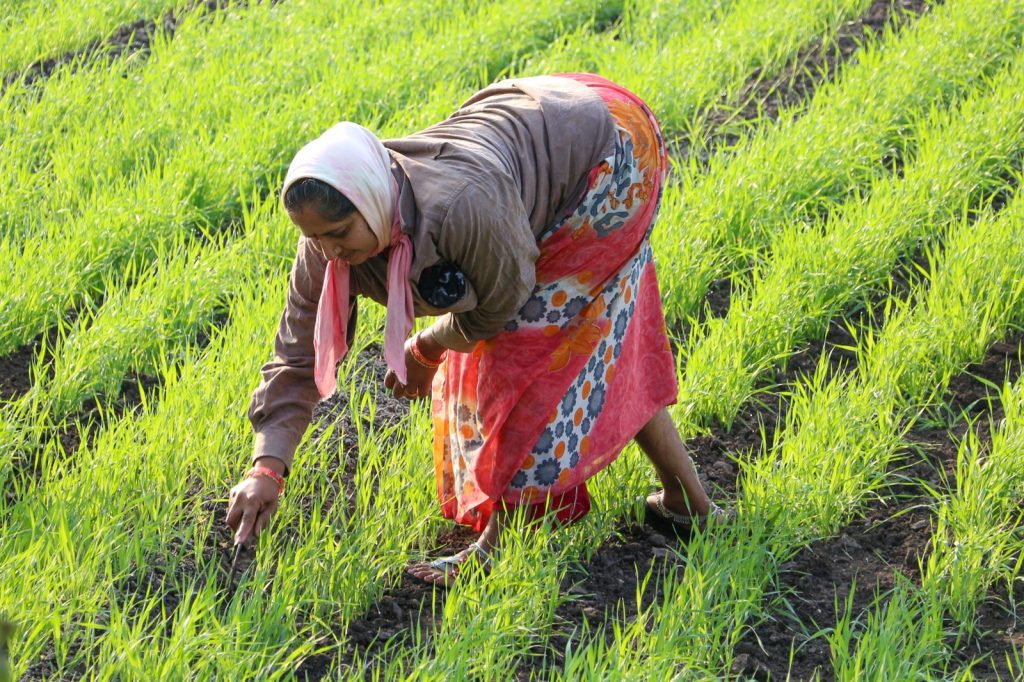
As global temperatures climb and extreme heat events become more frequent, farmers face a growing dilemma: how to shield crops from scorching conditions without cutting off the sunlight they need to grow. Climate scientists have documented that the planet is warming, driven by human activities such as burning fossil fuels that release greenhouse gases. Carbon dioxide levels in the atmosphere have reached concentrations not seen in millions of years, and the consequences–more intense heat waves, wildfires, droughts, and heavy rainfall–are already reshaping agriculture.
Heat stress reduces crop yields by disrupting photosynthesis, interfering with pollination, and hindering grain development. The challenge for growers is acute: they must find ways to cool their fields while preserving the light that drives plant growth.
The Challenge of Balancing Heat and Light
Conventional shade nets offer one solution, but they come with a fundamental trade-off. By blocking a broad spectrum of sunlight to lower temperatures, these nets also block visible light, the portion of the spectrum that plants use for photosynthesis. This reduction in light limits the amount of energy crops can capture, often resulting in lower yields.
Farmers are thus caught between the need to protect crops from extreme heat and the need to supply them with adequate sunlight. As each growing season brings hotter conditions, the pressure to resolve this trade-off has intensified.
Adaptation measures such as drought-resistant crops and improved irrigation can help, but there are limits to what can be achieved, especially in poorer communities that have contributed the least to climate change yet are often the most vulnerable.
A Targeted Approach to Filtering Sunlight
Sumitomo Metal Mining, a Japanese materials company, has developed a product that attempts to break the link between cooling and light reduction. The new agricultural shade cloth, called the Solament AgriCool Shade, is designed to selectively filter sunlight.
While conventional nets block a wide range of wavelengths, the AgriCool Shade targets only near-infrared light, the portion of the spectrum that carries heat. By allowing visible light to pass through, the cloth aims to keep crops cooler without dimming the light that fuels photosynthesis. The core innovation lies in this spectral selectivity: the material filters out heat-causing radiation while leaving the photosynthetically active wavelengths largely untouched.
The company has not disclosed production costs or a retail price for the shade cloth, and it has not released specific data on temperature reductions or yield improvements from the product.
The Gap Between Promise and Proof
Without those quantified performance metrics, the AgriCool Shade remains at a stage where its real-world effectiveness has yet to be demonstrated in independent field trials. The technology is a promising concept, but it is not yet a proven solution for commercial farming conditions.
The key question moving forward is whether the cloth can deliver measurable temperature reductions and meaningful yield improvements when deployed in actual fields. Farmers who are already feeling the effects of a warming climate–rising seas, acidifying oceans, more severe storms, and growing food and water shortages–will be watching for independent verification of the company’s claims. Even if emissions are cut sharply, some consequences of climate change, such as rising seas and disrupted ecosystems, will persist for centuries.
Adaptation technologies like the AgriCool Shade could reduce some dangers, but their value will only be confirmed through rigorous, transparent testing in the conditions they are meant to address.